
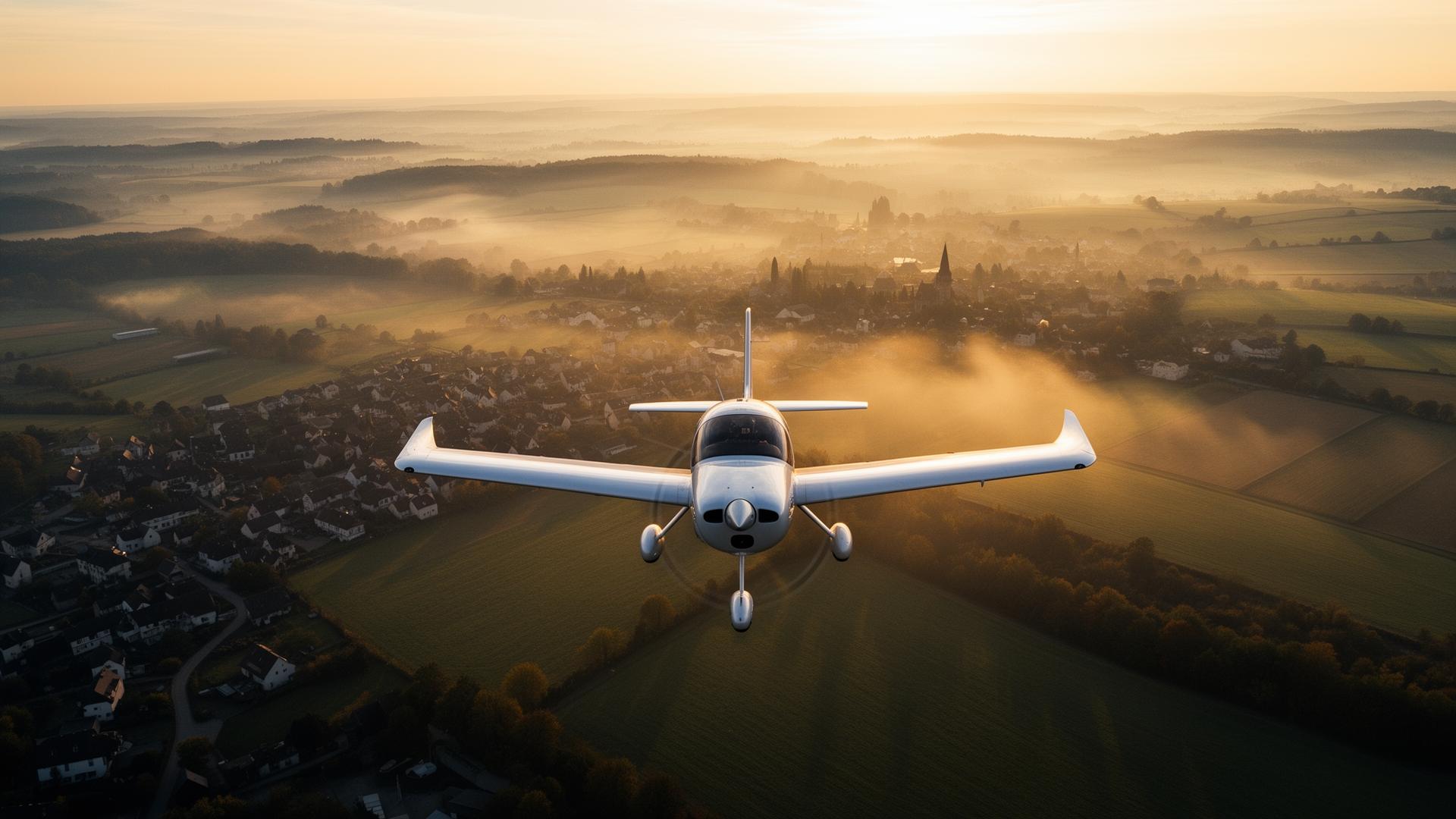
The Training Pathway
18 months. Zero to First Officer Ready. No compromise.
Selected cadets train at our European partner academy on an EASA-Integrated ATPL pathway — the fastest, most respected route from no flight experience to a type-rated First Officer seat with a partner carrier.
The Pathway
One integrated programme. Five sequential modules.
The EASA-Integrated ATPL is the curriculum of choice for major European airlines. Unlike modular routes — where students stitch together licences over many years from different schools — integrated training is one continuous syllabus, one cohort, one set of standards. It is faster, more rigorous, and consistently preferred by airline recruiters when shortlisting First Officer applicants.
For VAG cadets, every cost — tuition, flight hours, accommodation, examinations, type rating, line placement — is fully underwritten by the program.
The Curriculum
From the classroom to the flight deck — sequenced for mastery, not speed alone.
- MODULE 01Months 1–6
Theoretical Knowledge (ATPL Theory)
1,000 hours of structured ground school across the 13 EASA ATPL subjects — air law, principles of flight, meteorology, navigation, performance, mass and balance, instrumentation, communications, human performance and operational procedures. Cohort classroom delivery with weekly progress checks.
- MODULE 02Months 6–11
Single-Engine VFR & Night Flying
Approximately 110 flight hours on a modern single-engine training aircraft. Visual navigation, solo cross-country, controlled-airspace operations and the night rating — the foundation block where the cadet becomes a confident pilot-in-command.
- MODULE 03Months 11–14
Instrument Rating & Multi-Engine
Transition to a glass-cockpit multi-engine piston platform. Full IFR procedures, holding patterns, precision and non-precision approaches, asymmetric handling. CPL and IR skill tests under EASA examiner supervision.
- MODULE 04Months 14–16
UPRT, MCC & Jet Orientation
Advanced Upset Prevention and Recovery Training in an aerobatic aircraft. Multi-Crew Cooperation course in a Boeing 737 / Airbus A320-class fixed-base simulator. Performance-Based Navigation certification and ICAO English Language Proficiency assessment.
- MODULE 05Months 16–18
Type Rating & First Officer Readiness
Full type rating on a current-generation airline jet (commonly Boeing 737 NG / Airbus A320 family). Base training, MCC integration and final line-oriented evaluation. The cadet completes the programme as a fully type-rated, First-Officer-ready pilot, prepared to enter airline selection.
The Sponsorship Covers
Everything between Stage 05 and your first revenue flight.
An honest, itemised list of what VAG underwrites for the selected cadet. There are no hidden fees, no surcharges, no "extras" billed back to the student during training.
- EASA ATPL Integrated tuition — 220 flight hours
- 1,000 hours of structured classroom instruction
- All landing fees, fuel and aircraft costs
- Initial EASA Class 1 Medical examination
- ICAO English Language Proficiency assessment
- All 13 EASA ATPL ground exam fees (one attempt per subject)
- Two EASA flight skill tests with examiner
- Performance-Based Navigation (PBN) certification
- Advanced Upset Prevention & Recovery Training (UPRT)
- 40-hour APS MCC on a Boeing 737-class simulator
- Type Rating on a current-generation airline jet
- Cadet kit — flight bag, EFB tablet, headset, charts, logbook
- On-campus accommodation for the full 18 months
- Transport between residence and aerodrome
- First-Officer-ready graduation — airline selection support
The On-Time Commitment
The 18-month timeline is a contract — not a marketing line.
Some flight schools quote aggressive timelines and quietly bill students for every additional month they slip. Our partner academy operates the opposite philosophy: the cadet's pace is the academy's responsibility.
If a cadet is delayed beyond the published 18-month schedule for reasons within the academy's control, the academy absorbs every additional cost — instruction, accommodation, aircraft hours and examination retakes. The cadet pays nothing additional. Period.
Why This Academy
Forty years of European pilot training. One unbroken standard.
An EASA-Approved Training Organisation
Our European partner is a licensed ATO operating under the European Union Aviation Safety Agency — the most rigorous regulatory framework in commercial aviation worldwide.
Active Airline Captains as Instructors
The majority of the instructor cadre are line pilots — most ranked Captain — at major European carriers. The cadet learns from people who fly the line every week, not from career instructors only.
Modern Glass-Cockpit Fleet
Single-engine and multi-engine training aircraft with full glass cockpits, paired with Boeing 737-class simulators for advanced IFR, MCC and APS phases.
Small Cohorts, Personal Coaching
Cadet intakes are deliberately small. Every student is mentored individually by a senior instructor across the full 18-month journey.
The Environment
Trained in the most demanding airspace in Europe.
A pilot's first thousand hours shape every decade that follows. The campus we partner with sits at the intersection of mountain VFR, busy continental IFR, and sea-level international corridors — the most varied training ground in Europe.
- Climate
- 320+ flying days per year — predictable European weather, mild conditions, generous daylight.
- Airspace
- Mixed VFR / IFR exposure ranging from quiet alpine valleys to dense Class A international airspace.
- Scenery
- Lakes, mountains, coastlines and continental aerodromes — the most varied terrain syllabus in Europe.
- Engineering
- On-site EASA Part-145 maintenance organisation. Fleet airworthiness verified by Swiss-grade technicians.
Graduation
You graduate fully type-rated and First-Officer ready.
On completion, the VAG cadet holds an EASA frozen ATPL, MCC/JOC, UPRT, PBN certification and a current type rating on an airline jet — every credential required to step into airline First Officer selection with confidence.
Begin Application